Restorative practices is the science of relationships and communities. Restorative Literary Analysis is the examination of literature through a restorative lens. It includes repurposing restorative concepts and frameworks as analytical tools.
For example, Restorative Questions – also known as Affective Questions – were designed to examine and repair harm in a conflict between parties. I reworded them to help students analyze characterization and conflict in literature.
Restorative Questions to Analyze Conflict:
- Who was affected by the character’s behavior?
- In what ways were those people affected?
- Did the character make things right with those they harmed? Explain.
- What did you think or feel when you read what the character had done?
- What impact would the character’s behavior have on you or people you know?
- What do you think the character needs to do to make things right?
The lens of restorative practices can boost the rigor of any literary analysis activity. Here are general questions to ask of a text based on different topics within the scope of restorative practices:
Exploring Harm and Conflict
- What harm occurs in the story, and who is affected by it?
- How do different characters respond to harm or conflict? Are their responses productive, harmful, or somewhere in between?
- What systemic or societal factors contribute to the harm experienced by the characters? (e.g., racism, sexism, poverty, injustice)
Pathways to Healing and Restoration
- What steps do characters take toward healing or reconciliation, if any?
- Are there moments when characters seek forgiveness or attempt to repair relationships? What makes these moments significant?
- What role does storytelling, dialogue, or empathy play in the process of healing within the text?
Relationships and Community
- How are relationships impacted by conflict, and how do they evolve as the story progresses?
- What actions contribute to building or rebuilding a sense of community or belonging?
- How do characters support one another’s growth, healing, or understanding? Are there moments when someone acts as a “restorative agent” in the narrative?
Themes of Justice and Accountability
- How is justice portrayed in the story? Is it punitive, restorative, or a combination of both?
- Do characters take responsibility for their actions? How is accountability addressed or avoided?
- Are there moments when power dynamics are challenged, disrupted, or restored? How does this impact the characters and their communities?
Personal and Societal Transformation
- What personal transformations do characters undergo as a result of experiencing or addressing harm?
- How does the resolution (or lack thereof) suggest possibilities for healing or ongoing conflict?
- In what ways does the text invite readers to think about restorative practices in their own lives or communities?
Another strategy includes using the Compass of Shame – or Reactive Compass – and the Restorative Compass (read more here) as tools to examine a character’s responses to conflict. Below are the compasses and questions.
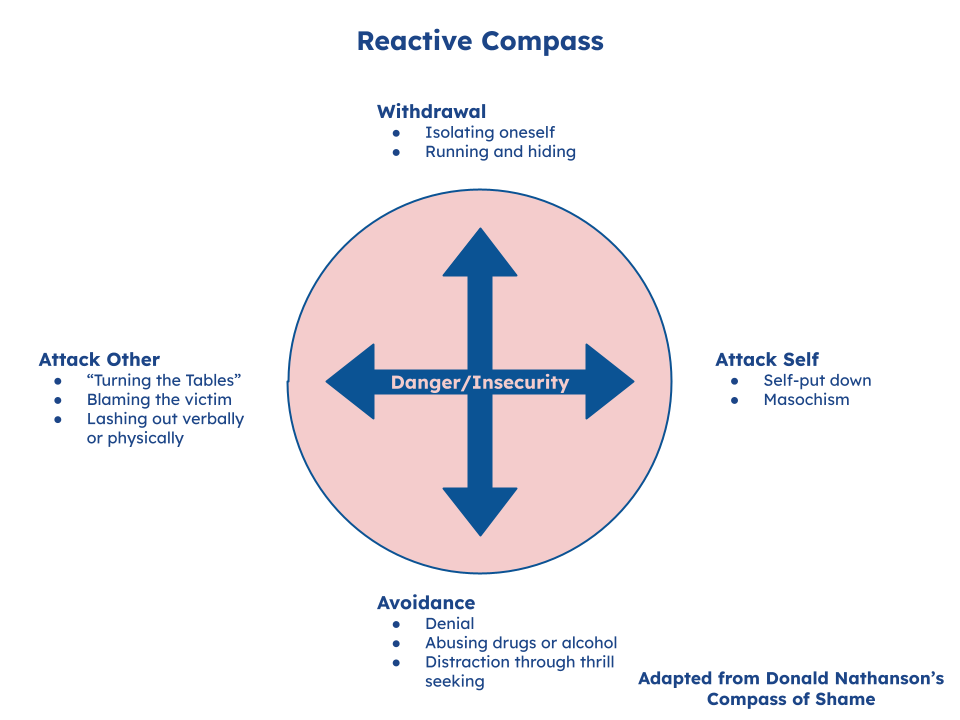
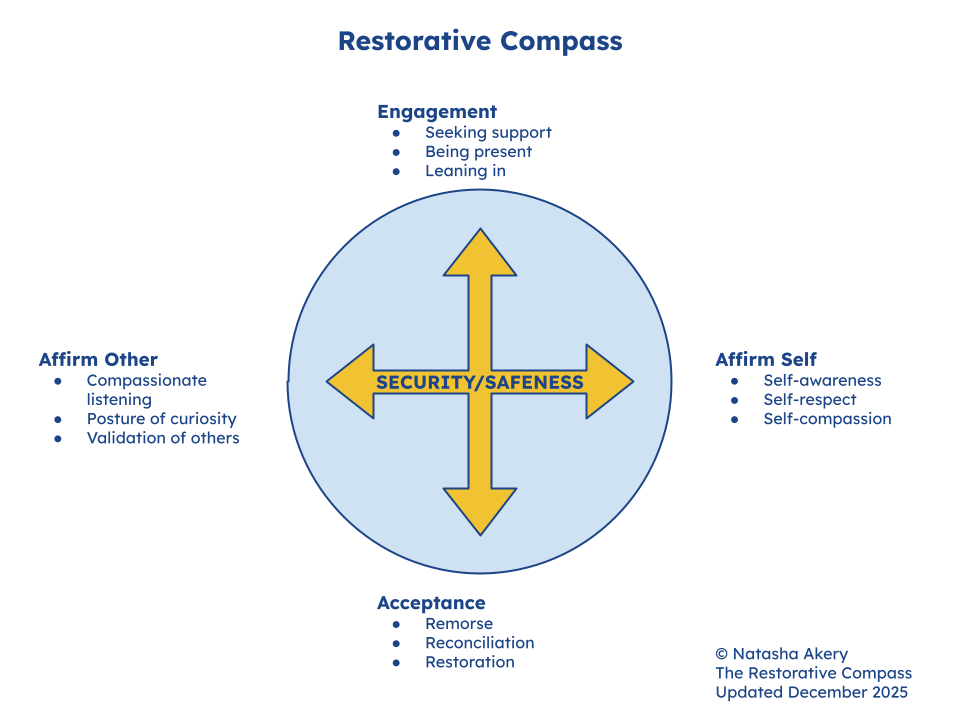
- How did the character react to the situation or event? Include as many “directions” as possible.
- How could the character restore the situation or event? Include as many”directions” as possible.
If you are interested in my preliminary data for the efficacy of restorative literary analysis, please consult this document.
 AkeryEd